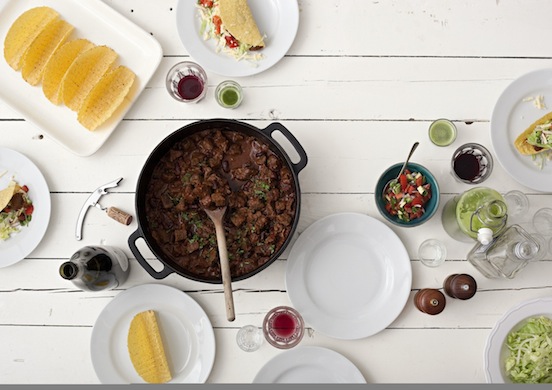
Today we have a recipe from the lovely Lucy Neuburger, and it’s just the thing for a hot day. Over to Lucy:
***
Serves a very greedy 1 person, though can easily be multiplied
For the salad
For the dressing
Today we have a recipe from the lovely Lucy Neuburger, and it’s just the thing for a hot day. Over to Lucy:
***
Serves a very greedy 1 person, though can easily be multiplied
For the salad
For the dressing
Filed under Recipes
No wait, come back! I promise this recipe is not as boring as it sounds. In fact, I’d cautiously venture that it’s the best Indian dish I’ve ever cooked – lively, aromatic, balanced and with just the right level of heat. It’s a dry affair, so needs something wet alongside it – you could certainly serve it as a side to a cauldron of korma, but as it was meat-free Monday I just ripped into the packet of dal I’d been given at the Bukhara pop-up (which is fully booked but on whose waiting list I advise you to promptly place your ass), and went at it with some steamed rice and a little raita.
Serves 2
2 tbsp vegetable oil
1 tbsp black mustard seeds
1/4 tsp asafoetida
20 or so curry leaves (dried will do)
1 dried red chilli
1 tsp ground cumin
2 tsp ground coriander
1/2 tsp turmeric
1 large red onion, peeled and finely sliced
2 cloves of garlic, peeled and finely sliced
1 long red chilli, sliced at an angle
A head of cauliflower, hacked into florets
100ml water
Salt and pepper
***
- Heat the vegetable oil over a medium-high in a saute or large-ish saucepan and add the mustard seeds. When they start to pop, add the asafoetida, curry leaves, red chilli and spices, and prod around the pan for a minute or two, taking care not to burn. Add the onion, garlic and chilli and season generously with salt and pepper. Lower the heat a little and cook for 10 minutes, stirring regularly.
- Throw in the cauliflower along with the water, cover and cook for 10-12 minutes, until the cauliflower is almost cooked. Remove the lid, whack up the heat, and cook for another 1-2 minutes. Keep warm while you finish off your other bits and pieces, and serve.
Filed under Recipes
Quails are lovely wee birds, russet and gay. When not twittering about and bumping into things they lay delicious and rather generously bite-sized eggs. Then, once they’ve inevitably met their maker, their meat is tender and juicy and just a little gamey. Do not be fooled by their size into thinking they just need showing the oven – they need a fair bit of cooking and can withstand it without drying out. Nor should you be fooled into thinking one bird per person is enough. It isn’t, or at least isn’t as a main course.
Serves 2
4 quails
Juice of half a lemon
1 tbsp runny honey
A garlic clove, pasted
Olive oil
Salt and pepper
For the salad
1 head gem lettuce, washed
Half a red onion, peeled and finely sliced
A small handful of pine nuts/flaked almonds
An orange, peeled and segmented
A stick of celery, trimmed and chopped
For the dressing
2 tbsp yoghurt
1 red chilli, deseeded and finely chopped
Juice of half a lemon
A good slosh of olive oil
1 tbsp finely chopped parsley
Salt and pepper
***
- Mix the lemon juice, garlic, honey, olive oil and seasoning and spread over the birds. Leave for as long as you can/like. Preheat the oven to 220C. Roast the quails for 20-25 minutes until golden and sticky.
- Meanwhile make the dressing by mixing all the ingredients and having a taste. Put the pine nuts on a baking tray and bake in oven for 2 minutes.
- When the birds are cooked, rest them for 5-10 minutes then remove the legs and breasts. Toss the whole lot on a plate with as little or as much fuss as you like and get stuck in.
Filed under Recipes
So perhaps I should explain why I’ve been relatively off-radar for the last few months.
Shortly after new year fellow gastro-scribe Oliver Thring and I sat down over a cup of tea and a hobnob and wagged chins over the prospect of doing something street foody. As you probably know there are some very good vibrations surrounding the street food scene in London at the moment (doff of cap to Petra Barren and Richard Johnson, among others), and we wanted to get involved.
After several hobnobs (me) and at least two cups of Yorkshire tea (Ollie), we landed on kebabs. Stigmatised, dirty, drunken kebabs. And we decided to make the best ones in London.
Cue training montage of spreadsheets and bike rides around town eating five kebabs a day. And then off to Turkey, where…
…and eventually came back as fat and happy as a Christmas goose, with what we think is a pretty good idea of what makes a truly delicious kebab.
Ours will consist of beautiful British meat – chicken or lamb – that has gone nowhere near a mincer and has been marinated to within an inch of its life, red cabbage pickled in pomegranate molasses, onions with lemon, sumac and parsley, roasted chillies, smoked garlic buffalo yoghurt, bruising chilli sauces, and fresh tomato and cucumber salsa, all wrapped up in warm lavash bread – none of this cardboard pitta at the bottom of a soggy wrapper nonsense.
We’re calling it Kebab Kitchen, and we’re launching this Friday night at The StockMKT in Bermondsey. Would be great to see some of you there.
***
Click here to see our website.
Click here for Ollie’s side of the story.
Here for our Twitter page.
And here for the Facebook page.
A night alone, then. There is a ball of pasta dough in the fridge left from Rosie’s wild garlic and ricotta ravioli, a tube of tomato puree, some milk, and a few other odds and sods. I scoop up 500g pig cheeks for £1.99 from Delia and Heston’s favourite supermarket, as well as a couple of heads of chicory. This meal has cost me no more than £5 and it could serve 4 probably not ravenous people, perhaps with garlic bread for good measure.
While the ingredient list is relatively long, and there are several processes to go through, this really doesn’t require too much of your own time and effort. The hob does most of the work. Nevertheless, if the lasagne palaver isn’t for you, the pig cheek ragu will go terrifically with another pasta – say, tagliatelle.
Serves 4
For the pig cheek ragu
500g pig cheeks
An onion, peeled and finely chopped
A stick of celery, trimmed and finely chopped
A clove of garlic, peeled and finely chopped
400ml red wine
3 tbsp tomato puree
A bay leaf
Salt, pepper, olive oil
For the white sauce
25g butter
2 tbsp plain flour
300ml milk (makes quite a thick sauce, add more milk for a wetter end product)
A handful of grated parmesan
A little grated nutmeg
The rest
4-6 sheets of lasagne/rolled fresh pasta
Parmesan cheese
*****
- In a saute pan or lidded frying pan (lid firmly in drawer for the time being), heat a drop of oil over a brutish flame. Brown the pig cheeks for a minute or so on each side, seasoning with salt and pepper as you do, then remove to a plate. Bring the heat right down and add a little more oil if necessary, then add the onion, celery and garlic. Cook over a low heat, stirring regularly, until softened. This will take up to 10 minutes. Be very suspicious of any recipe that tells you it only takes ‘a couple of minutes’.
- Now your vegetables are soft, whack the heat back up and add the wine and tomato puree, stirring to mix the puree through. Bring to a boil and simmer for a minute or two, then add the pig cheeks and bay leaf. Cover and braise quietly over the lowest heat for an hour and a half to two hours.
- Meanwhile make the white sauce. Melt the butter over a medium heat and stir in the flour. Cook for a couple of minutes, stirring regularly, then slowly add the milk, continuing to stir as you go. Warming the milk first expedites the process but also uses another saucepan. Season with nutmeg, salt and pepper, and simmer for 5 minutes before adding the parmesan. Take off the heat and set aside.
- Bring a pan of salted water to a boil and add the pasta sheets. Simmer for 1 minute, drain, and run under a cold tap.
- Have a cup of tea.
- When the pig cheeks collapse under a prod from a spoon, they are ready. Take off the heat and attack with a fork until the meat is broken up.
- Take a medium-sized, oven-proof dish, and bespatter it with a few flicks of white sauce. Add a spoonful or two of pig cheek ragu then top with a sheet of pasta. Repeat until finished, making sure there’s enough white sauce to spread over the final sheet of pasta. Finish this with a good grating of parmesan and set aside/refrigerate until ready.
- Preheat the oven to 180C. Bake the lasagne for 25-30 minutes, until golden on top and bubbling within. Serve with something green. I cooked halves of chicory face down in butter. Not a bad choice.
Filed under Recipes
On Thursday night we were incredibly lucky to have Mark Forsyth, author of the wonderful Etymologicon, to speak about the etymology of the menu the guests ate. Here’s his speech:
Filed under The Secret Larder
This lightning recipe was inspired by a lovely new restaurant on Portobello Road called Goode and Wright. They serve something similar on toast, but being a good Dukan boy I’ve done it without. Actually, I think bavette is probably a bit naughty for strict Dukaners, but it’s hardly a bowl of chips. Anyway, if you’re that way inclined then use sirloin or something instead, though there is something particularly delicious about the bavette – it’s got body and gaminess and a really good, meaty punch. Trim the fat and away you go…
***
Serves 1
half a red onion, peeled and sliced
a slosh of red wine
200g bavette steak, trimmed if you must
an egg
Salt, pepper, oil
- Preheat the oven to 60C.
- Lightly grease a non-stick frying pan with a drop of oil and get it over a medium high flame. Add the onions, season, and fry, letting them catch here and there but basically stirring constantly. Add a splosh of red wine and simmer for a further minute or until entirely absorbed. Tip onto a plate and pop in the oven.
- Wipe the pan clean and get back over a ferocious heat. Season the meat with lots of pepper and a pinch of salt, and fry for two minutes on each side. Stick on the plate with onions and rest in the warm oven for 10 minutes. This resting time is ESSENTIAL. Without it you will have a steak that is akin to chewing a wallet.
- Once the steak is well rested, lightly grease the same pan again and put over a medium heat. Drop in an egg and fry as you wish. I tend to put a lid over it and leave for about 90 seconds. The result is always spot on, but, well, I’m not here to tell you how to fry an egg.
- Slice the meat and serve with your egg on top and a jar of mustard.
Filed under Recipes
For me one of the most decadent and delicious breakfast dishes is eggs benedict. Is there a better way to say ‘good morning, I love you’ than toasted muffin, crisp pork, and soft poached eggs bespattered with silky hollandaise? Arguably not.
But it’s quite an involved dish, requiring several components that need to come together simultaneously. Not what you want on Valentine’s when you should be cooing and eye-fluttering. Romance rarely arose from a hunched lover sweating and gurning over a crowded hob. No, the placid cook is the best romancer.
This recipe offers the same level of creamy indulgence as eggs benedict without the headache. And we all know the effects of an unexpected headache can have on passion’s early flickerings.
Serves 2. Obviously.
Butter, about 15g (steady, Marlon)
2 slices of brioche
2 slices of smoked ham
2 Clarence Court Burford Brown eggs
100ml double cream
Parmesan cheese, grated
Salt and pepper
***
- Preheat the oven to 200C.
- Generously butter two ramekins. Trim the brioche to fit in the bottom and gently thumb it in. Do the same with the ham. Break the eggs over the top and finish with the cream.
- Scatter with parmesan and season generously with salt and pepper.
- Bake for 12 minutes until the egg is just set. Serve with toast and a kiss.
I am a brand ambassador for Clarence Court.
Filed under Recipes
Can’t be arsed with a preamble. Too much to do. This recipe rocks and is Dukan-friendly etc.
Serves 4
2 red onions, peeled and roughly chopped
1 clove garlic, peeled and finely sliced
1 head of fennel, trimmed and chopped
A piece of orange peel
A dried red chilli
A big glug of vermouth or Pernod
A handful of cherry tomatoes
A tin of tomatoes
500g white fish, chopped into chunks
200g raw prawns
A handful of clams
For the gremolata
A bunch of parsley, finely chopped
A clove of garlic, finely chopped
Zest of a lemon
- Heat a drop of oil in a large saucepan and gently fry the onions, garlic and fennel with a pinch of salt until softened. Ten minutes should do it. Add the orange peel, chilli, and vermouth, and simmer for a couple of minutes before adding the tomatoes. Cover and simmer for five minutes until the cherry tomatoes have softened but haven’t broken down entirely. Add the fish, stir, cover and simmer gently for 5-10 minutes until the clams have all opened and the fish is cooked.
- Meanwhile make the gremolata by mixing the parsley, garlic, and lemon zest. Season the stew with a generous scrunch of pepper and serve with a sprinkling of gremolata and, if you’re not a tedious Dukan groupie, some crusty bread.
Filed under Recipes